


Many organisations are still experimenting with AI, but earlier adopters are already putting it to use across multiple operations within their businesses.
Agentic AI marks a fundamental shift in how work gets done. We’re moving beyond AI that simply assists users or answers questions, towards AI agents that can run business processes end to end – autonomously, intelligently and at scale.
For business leaders this is not something that might happen in the future. Agentic AI is already being embedded into enterprise platforms like Microsoft and leading BPM tools such as Nintex. The real challenge is no longer if the technology works, but whether your organisation is ready to deploy it responsibly and effectively.
From automation to autonomy
Traditional automation focuses on rules, while agentic AI focuses on outcomes. An AI agent doesn’t just follow a predefined path, it can:
- Interpret business objectives
- Decide which actions to take
- Interact with systems, data and people
- Handle exceptions and escalate when needed
When combined with mature business process automation (BPA) platforms, agentic AI transforms static workflows into adaptive, self-managing processes and this is where the next wave of productivity gains will come from.
Agentic AI and your existing technology stack
One of the biggest misconceptions about agentic AI is that it requires a wholesale replacement of your current systems. In reality, the opposite is true – agentic AI delivers the most value when it is layered on top of the platforms your business already relies on. For example:
The Microsoft ecosystem as an AI foundation
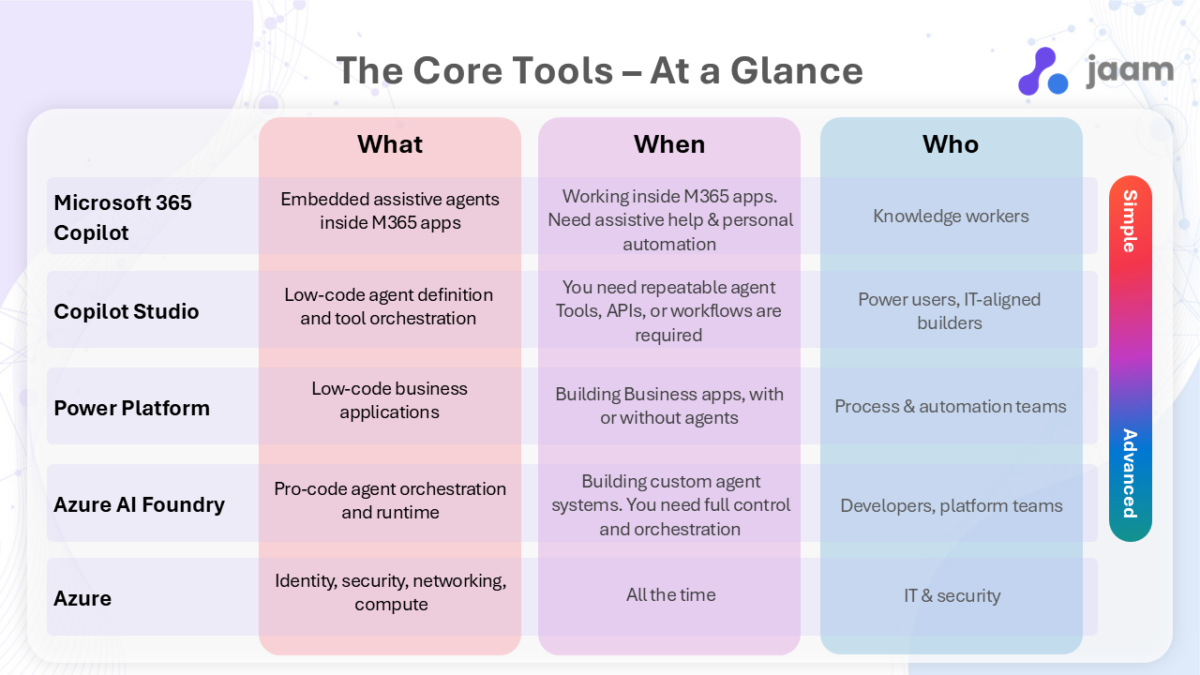
Across Microsoft 365, Azure, Power Platform and Dynamics, organisations already have:
- Secure identity and access controls
- Rich operational and business data
- Established workflow and integration capabilities
Agentic AI can act as an intelligent orchestration layer, using Microsoft tools to observe, decide and act across processes that already exist. And, of course, the Microsoft technology stack is ripe for the build of brand new agentic processes.
Established BPM platforms like Nintex
Platforms such as Nintex provide:
- Process modelling and orchestration
- Human-in-the-loop approvals
- Governance, auditability and compliance
When augmented with AI agents, BPM platforms evolve from process engines into process decision-makers that are capable of adapting flows dynamically based on context, risk or real-time information. And it’s this combination that turns automation into autonomy.
Agentic AI is an organisational readiness test
Technology is rarely the limiting factor when thinking about something new, organisational readiness is. From our experience delivering AI-powered BPA, the same challenges appear again and again:
1. Processes aren’t designed for intelligence
If workflows are undocumented, overly complex, or built around workarounds, AI agents will simply replicate inefficiency faster. AI readiness begins with process clarity and intent.
2. Data exists, but isn’t operational
Most organisations have plenty of data inside Microsoft platforms and BPM tools. The problem is that it’s not structured, governed or accessible enough for autonomous decision-making – and agentic AI depends on trusted, contextual data.
3. Automation has no clear owner
Agent-led processes require explicit ownership:
- Who defines success?
- Who sets boundaries?
- Who intervenes when outcomes drift?
Without this, autonomy can become risk.
4. Governance is an afterthought
In regulated environments, especially across the UK and EU, governance cannot be bolted on later. Agentic systems must be designed with transparency, auditability and control from day one.
What AI-ready organisations do differently
Organisations prepared for agentic AI share several key traits:
They design for safe autonomy
Agentic-ready organisations are deliberate about:
- Which decisions AI agents can make
- Where human approval is required
- How exceptions and risk are managed
They automate end-to-end processes
Instead of automating individual tasks, they focus on complete business processes such as onboarding, service fulfilment, finance operations or compliance workflows. And when done properly, this is where AI agents can deliver compounding returns.
They treat AI agents as digital workers
AI agents are planned, governed and measured just like any other part of the workforce, with clear KPIs, monitoring and accountability.
They build on proven platforms
Rather than a complete technology overhaul, they extend trusted platforms like Microsoft and Nintex with agentic intelligence, accelerating adoption while reducing risk.
How jaam helps organisations operationalise agentic AI
At jaam automation, we specialise in delivering agentic AI-powered business process automation across the Microsoft technology stack and leading BPM platforms.
We help organisations:
- Identify processes ready for agent-led automation
- Embed AI agents into Microsoft and BPM ecosystems
- Design human-in-the-loop and governance controls
- Scale automation safely across the enterprise
The result is not “AI projects”, but AI-enabled operations which are faster, more resilient and ready for what comes next.
To discuss whether your business is ready to agentic AI into your operational technology mix, you can grab a free 30 minute chat with jaam experts to take advantage of our intelligent automation experience.
A final word for business leaders
Agentic AI is not a future trend. It is a current operational reality. The organisations that succeed will be those that prepare their processes, platforms and people, as soon as they can. Those that don’t will find themselves reacting to competitors who have already built autonomy and automation into the heart of their operations.
Agentic AI won’t replace leadership, but it will reward those who act early.